
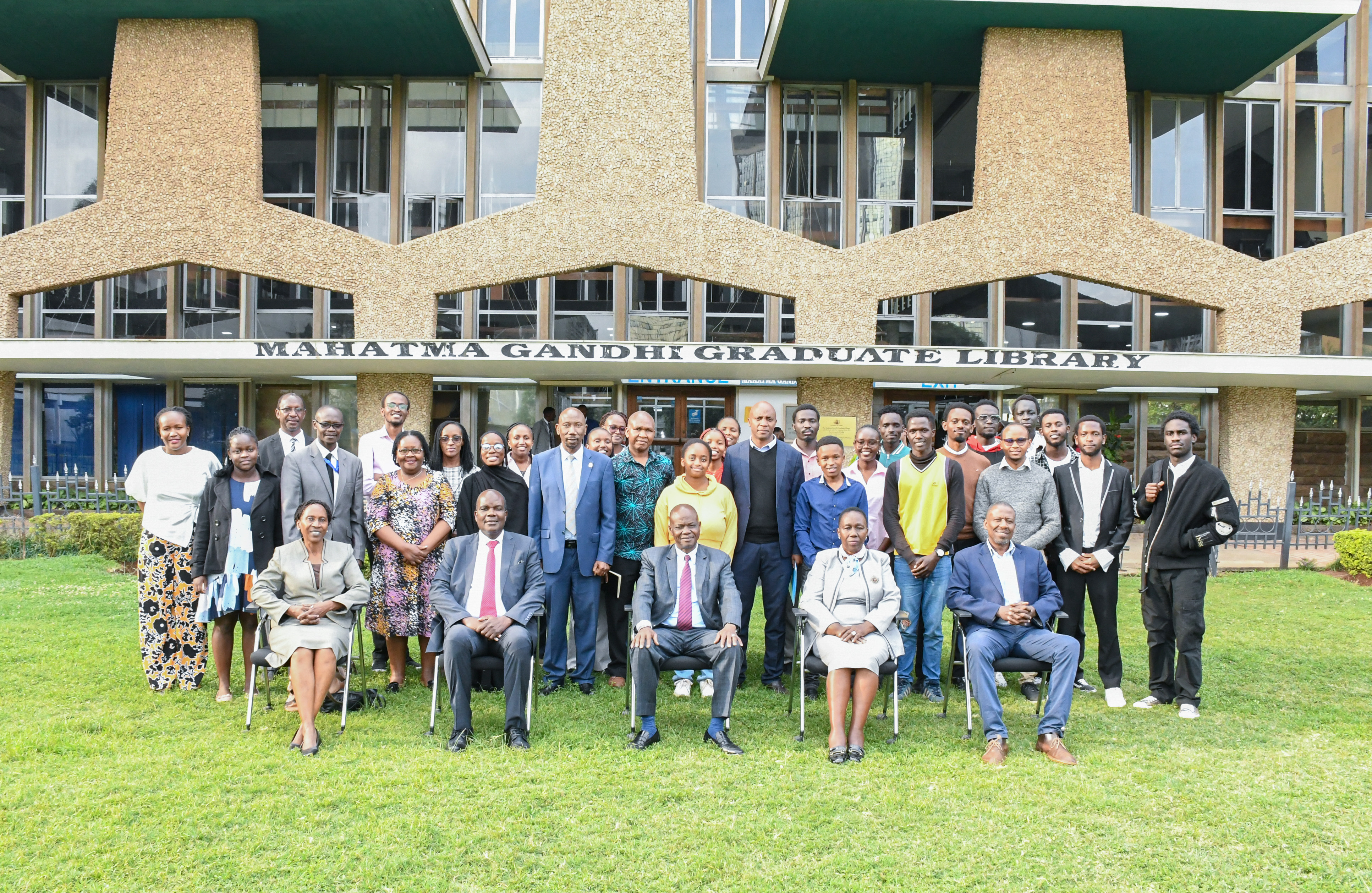
The University of Nairobi leadership, led by the Vice-Chancellor, Prof. Ayub Gitau, together with the Deputy Vice-Chancellor (Academic Affairs), Prof. John Mande, and the Deputy Vice-Chancellor (Research, Innovation and Enterprise), joined the University's Afretec team on 9th July 2026 in celebrating 19 students who successfully completed an intensive Embedded Systems training programme at Gearbox.
The training was delivered under the African Engineering and Technology Network (Afretec), a Pan-African consortium of leading technology-focused universities committed to driving inclusive digital transformation across Africa through excellence in engineering education, research, innovation, and entrepreneurship. At the University of Nairobi, the programme supports students from the Faculty of Engineering and the Faculty of Science and Technology, providing them with industry-relevant technical competencies and practical experience that complement their academic training.
The Embedded Systems programme is anchored on Problem-Based Learning (PBL), enabling students to work on real-world industry challenges while developing practical engineering solutions. Throughout the programme, students acquired hands-on skills in embedded systems design, electronics, Internet of Things (IoT), programming, systems integration, and product development. By collaborating in multidisciplinary teams, they strengthened their problem-solving, innovation, teamwork, and project management skills, preparing them for careers in the rapidly evolving technology sector.
Speaking during the celebration, Vice-Chancellor Prof. Ayub Gitau reaffirmed the University's commitment to supporting initiatives that enhance graduate employability while nurturing innovation and entrepreneurial skills that can be translated into commercially viable solutions. He emphasized that Problem-Based Learning (PBL) is a transformative approach to teaching and learning, enabling students to apply theoretical knowledge to real-world challenges, develop critical thinking, creativity, collaboration, and problem-solving skills, and produce innovative solutions with commercial potential.
The Vice-Chancellor further noted that PBL will play a pivotal role in preparing the University for the full implementation of the Competency-Based Curriculum (CBC), as students expected to join universities from 2029 will require experiential learning approaches that prioritize practical competencies, innovation, and strong industry engagement. He underscored the importance of sustained partnerships between academia and industry in producing graduates who are globally competitive, entrepreneurial, and equipped to address societal and industrial challenges while contributing to Kenya's socio-economic transformation.
The programme is championed by Dr. Kamau Gachigi, Executive Director of Gearbox, who congratulated the students for successfully completing the rigorous training. He noted that the programme's pedagogy is deliberately multidisciplinary, bringing together students from diverse academic backgrounds to collaborate on solving real-world engineering challenges. According to Dr. Gachigi, this approach mirrors modern industry practice, where innovation thrives through collaboration across disciplines.
As part of the ceremony, three students showcased innovative projects developed during the programme, demonstrating the practical application of embedded systems technology to solve contemporary challenges.
Featured Student Projects
1. Automated Energy Metering and Consumption Monitoring System
Student: Maina Michael Wachira
Maina developed a low-cost IoT-enabled smart energy meter built on the ESP32 microcontroller. The system monitors single-phase electrical parameters in real time, calculates energy consumption and associated costs, enables remote load control and scheduling, and synchronizes data to a Firebase cloud dashboard while displaying live telemetry on an LCD interface. The solution offers an affordable approach to intelligent energy management for homes and businesses.
2. Real-Time Environmental Monitoring System for Industrial and Commercial Spaces
Student: Khairun Abdallah
Khairun designed an end-to-end IoT platform capable of monitoring environmental and safety conditions across multiple industrial and commercial facility zones. The system integrates specialized sensor nodes with a secure backend and time-series database to provide real-time visualization of environmental parameters and intelligent alert management, supporting safer and more efficient workplace operations.
3.ProjectTether
Student: Dennis Bor
Dennis developed Project Tether, a Bluetooth Low Energy (BLE)-based proximity tracking system designed to help users avoid misplacing valuable belongings. Unlike conventional GPS trackers, the solution continuously monitors the distance between tagged items and the user's smartphone, triggering an immediate alert whenever an item moves beyond a predefined range. The project demonstrates an innovative and practical application of embedded systems technology to everyday challenges.
The successful completion of the Embedded Systems programme marks another significant milestone in the University of Nairobi's commitment to producing industry-ready graduates equipped with practical, future-focused skills. Through strategic partnerships with Afretec and Gearbox, the University continues to strengthen industry–academia collaboration, foster innovation, and nurture a new generation of engineers, scientists, and technology professionals capable of driving Africa's digital transformation.
- Log in to post comments


