
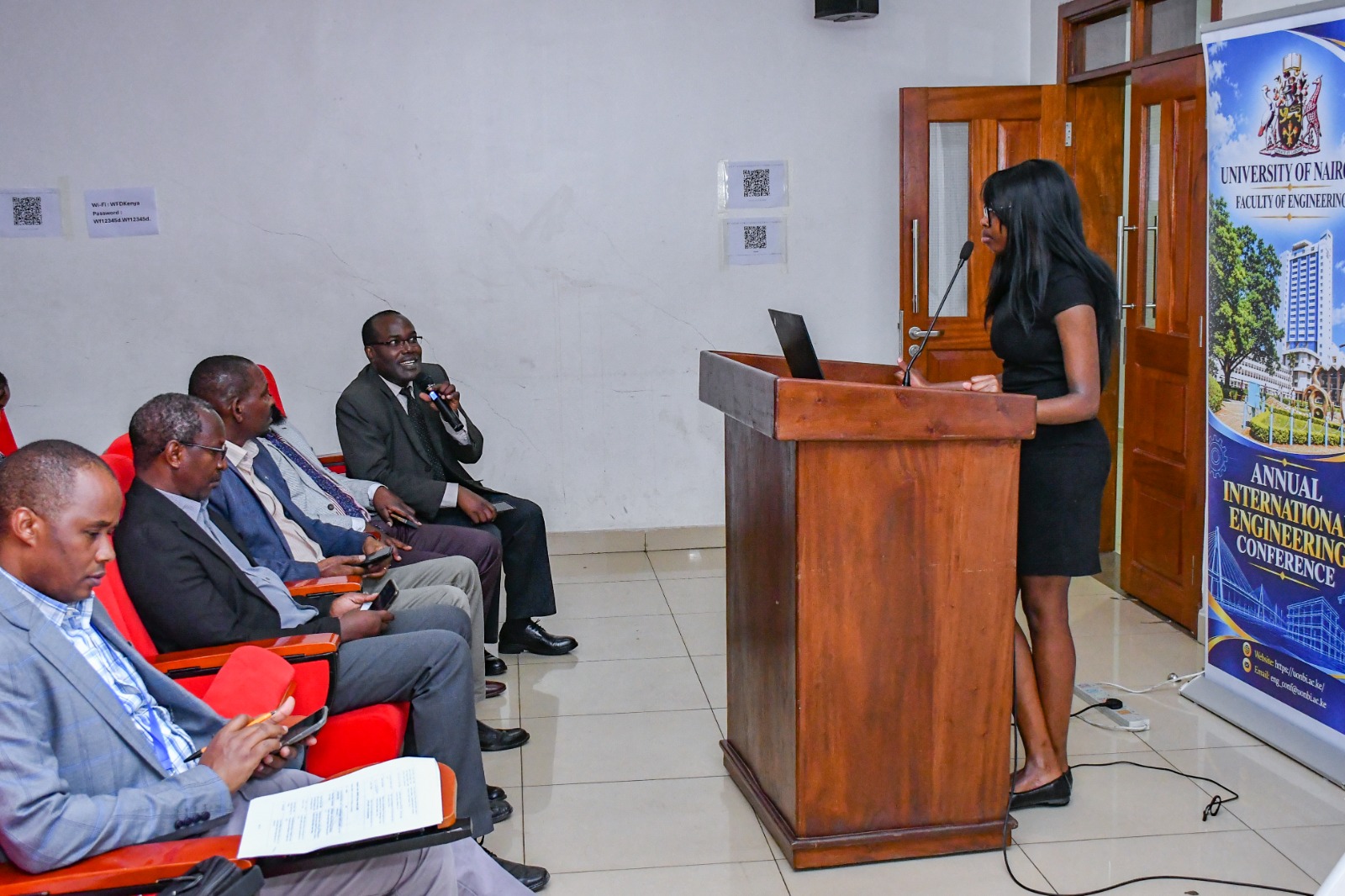
The University of Nairobi's Faculty of Engineering has reaffirmed its commitment to advancing research excellence, technological innovation and global competitiveness during the 11th International Engineering Conference on 22nd and 23rd October 2026, held at the University as part of the annual Research Week. The conference was held under the theme "Transforming Society through Research Excellence, Artificial Intelligence and Other Emerging Technologies in a Globally Competitive Environment."
The conference brought together academic staff, researchers and students to explore the role of engineering research, Artificial Intelligence and emerging technologies in addressing societal challenges and driving innovation.
Speaking during the conference, the Chairman of the Organising Committee, Eng. Dr. John Birir, emphasised that engineering excellence goes beyond solving complex equations and developing technical models. He challenged researchers to strengthen their academic writing and scholarly communication skills, noting that the ability to articulate research ideas, document findings and communicate their impact is essential in advancing knowledge and attracting research funding.
Dr. Birir highlighted the Faculty's Engineering Conference series, which began in 2018, as an important platform for research dissemination and knowledge exchange. He called for increased participation by academic staff and postgraduate students, setting an ambition of achieving nearly 100 per cent participation in future editions. He urged lecturers to mentor students, Heads of Departments to mobilise researchers and senior academic leaders to lead by example through active research presentations.
Representing the Dean, Eng. Prof. Simpson Osano highlighted the Faculty's roadmap towards attaining accreditation under the Washington Accord, with the aim of achieving international recognition by the end of the year. The initiative reflects the Faculty's commitment to aligning engineering education with international standards and enhancing the global recognition of its graduates.
Prof. Osano also called for greater community involvement in research, emphasising that communities must actively participate in identifying research priorities and developing solutions. He noted that research should respond to real-world needs and translate into practical interventions that improve livelihoods and support sustainable development.
The conference reinforced the importance of strengthening research participation, embracing emerging technologies, promoting internationally recognised engineering education standards and fostering community-centred innovation.
Ultimately, the discussions reaffirmed that engineering research must go beyond academic inquiry to generate practical solutions and meaningful societal impact.
- Log in to post comments


