
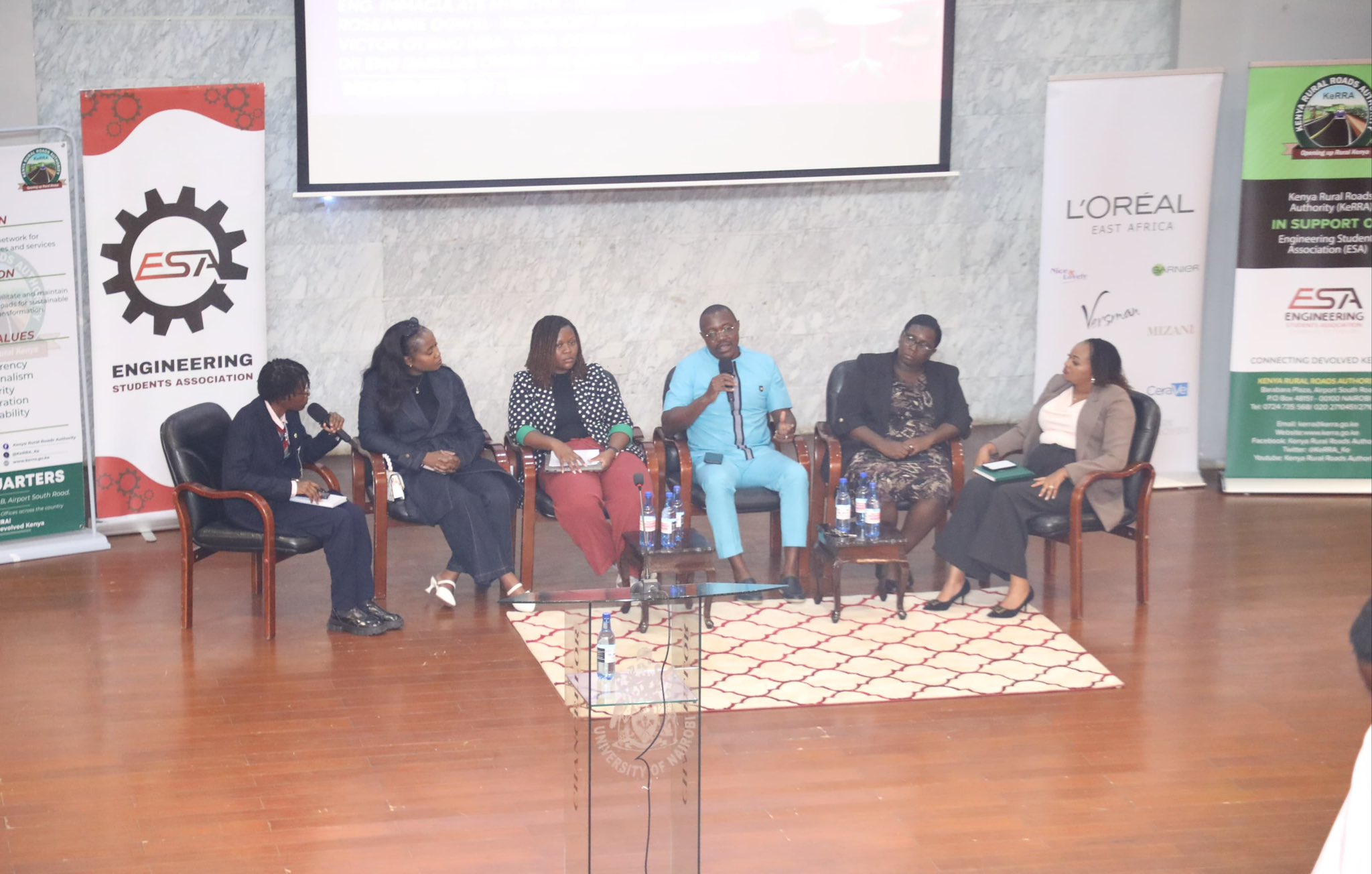
The 4th edition of the Women in Engineering Students Summit (WIESS 4.0) was held on Friday, 27th February 2026 under the theme Igniting New Frontiers: Women Leading the Next Era of Innovation. What began in 2023 as a student-led initiative has become one of the more substantive annual gatherings in the Faculty of Engineering's calendar. The summit was organized by the Engineering Students' Association (ESA-UON) and sponsored by Kenya Power, the Kenya National Highways Authority, the Kenya Roads Board, and the Engineers Board of Kenya.
More than 300 engineering students from four universities; University of Nairobi, Strathmore University, Multimedia University, and the Technical University of Kenya gathered at the Chandaria Auditorium. This year’s session also drew participation from professional engineers and industry regulators. The summit examined how female engineers can drive change across industry and entrepreneurship. Panel discussions covered translating ideas into innovation, navigating government policy, and sustaining mental resilience.
The Dean of the Faculty of Engineering Prof. Siphila Mumenya opened the summit. "We are living in an era defined by rapid technological transformation," Prof. Mumenya said. "Artificial intelligence, renewable energy systems, and digital engineering are redefining how societies function. Women must not only participate. They must lead." The Faculty, she added, is committed to expanding research opportunities, deepening industry partnerships, and creating defined leadership pathways for women in engineering.
Eng. Monica Wangari, standing in for Engineers Board of Kenya Registrar Eng. Margaret Ogai, addressed students on the Board's core mandate: engineer registration, standard-setting, and public interest protection and tied those functions directly to the career decisions students in the room were about to make. “Engineering is a noble profession," Eng. Wangari told the assembly. "Today's summit speaks directly to its future, professional integrity, does not begin at registration. It begins now.”
The day's programme ran across 3 panel discussions, a fireside chat, and an exhibition. Speakers addressed how to translate a technical idea into a fundable proposal. How to navigate the gap between engineering competence and government procurement policy. How to build professional networks that outlast university. One panelist, Eng. Damaris oyaro from the Faculty of Engineering, put it plainly: “Leadership is learned on the job, failure is part of the curriculum, and every voice in the room carries weight.” Together, these conversations moved beyond motivation and into performance, accountability and long-term career positioning.
WIESS 4.0 therefore served as more than a student summit. It functioned as a bridge between academic preparation and regulated practice. For the Faculty, the implications are practical: strengthened mentorship pipelines, early exposure to registration requirements, increased awareness of ethical standards and measurable progression from student membership to graduate engineer status.
As Kenya advances toward industrial growth and technological transformation, engineering capacity will increasingly be assessed not only by enrolment numbers but by professional registration rates, compliance with standards and leadership presence across sectors. The continuity challenge now shifts from convening conversations to tracking outcomes.
- Log in to post comments


